Discover the Joy of Happy Monkey: A Playful and Cheerful Rounded Display Font
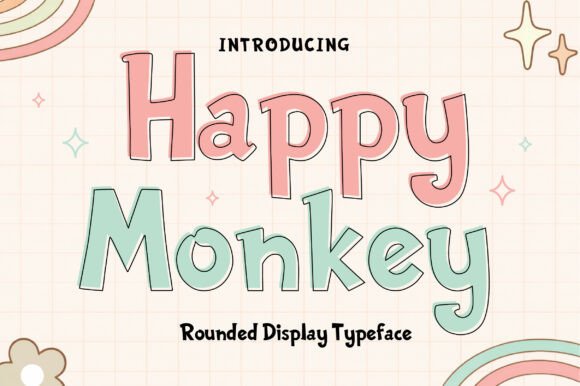
Happy Monkey is a delightful and charming rounded display font that brings a burst of joy and personality to any design. With its chunky letterforms, soft curves, and pastel-inspired styling, it creates a warm, friendly, and fun visual experience. The bold yet smooth strokes ensure excellent readability while maintaining a cute and whimsical charm. Whether you're working on kids' projects, birthday invitations, posters, stickers, packaging, nursery designs, or social media graphics, Happy Monkey is an excellent choice.
Why Choose Happy Monkey?
Happy Monkey stands out with its playful and cheerful appearance, making it perfect for a wide range of creative projects. Its unique design elements, such as decorative flourishes and lively color combinations, add an extra touch of creativity, making every design feel bright and engaging. Whether used for print or digital, Happy Monkey shines in headlines and eye-catching typography.
Mistake 1: Overusing the Font in Large Blocks of Text
While Happy Monkey is highly readable, it's not designed for long paragraphs. Overusing it in large blocks of text can make your content look cluttered and hard to read. Instead, use it for headlines, titles, and short, impactful statements.
Mistake 2: Ignoring Color Combinations
Happy Monkey's pastel-inspired styling works best with complementary colors. Using clashing or overly vibrant colors can detract from the font's charm. Stick to a cohesive and harmonious color palette to enhance the overall aesthetic.
Mistake 3: Neglecting Spacing and Alignment
Proper spacing and alignment are crucial for any font, but especially for a playful one like Happy Monkey. Poor spacing can make your design look unprofessional and sloppy. Take the time to adjust line spacing, letter spacing, and alignment to ensure a clean and polished look.
Mistake 4: Not Considering the Audience
Happy Monkey's playful and cheerful nature makes it ideal for certain audiences, such as children, young adults, and those who appreciate a whimsical touch. However, it may not be suitable for more formal or serious contexts. Always consider your target audience and the tone of your project before choosing this font.
Choose the Right Context
Happy Monkey is perfect for creative and informal projects. Use it for birthday invitations, children's books, and playful social media graphics. For more formal or professional documents, consider a more traditional and elegant font.
Combine with Complementary Fonts
To create a balanced and visually appealing design, pair Happy Monkey with a complementary font. A simple sans-serif or serif font can provide a nice contrast and make your design more versatile. For example, use Happy Monkey for headings and a clean, simple font for body text.
Test Readability and Legibility
Before finalizing your design, test how well Happy Monkey reads at different sizes and on various backgrounds. Ensure that the font is legible and that the message is clear. Adjust the size, color, and spacing as needed to improve readability.
Use Decorative Elements Wisely
Happy Monkey includes decorative elements that can add a unique touch to your design. Use these elements sparingly to avoid overwhelming the viewer. Incorporate them in a way that enhances the overall design without distracting from the main message.
What to Check Before Using Happy Monkey
- Licensing: Make sure you have the appropriate license to use Happy Monkey for your intended purpose, whether it's personal, commercial, or web-based.
- File Formats: Verify that the font comes in the formats you need, such as .ttf, .otf, or web fonts. This ensures compatibility with different design software and platforms.
- Support and Updates: Check if the font comes with support and updates. This can be particularly useful if you encounter any issues or need additional features.
- User Reviews and Examples: Look at user reviews and examples of how others have used Happy Monkey. This can give you a better idea of its versatility and potential applications.
By following these practical tips and avoiding common mistakes, you can make the most of Happy Monkey and create designs that are both joyful and effective. Happy designing!